
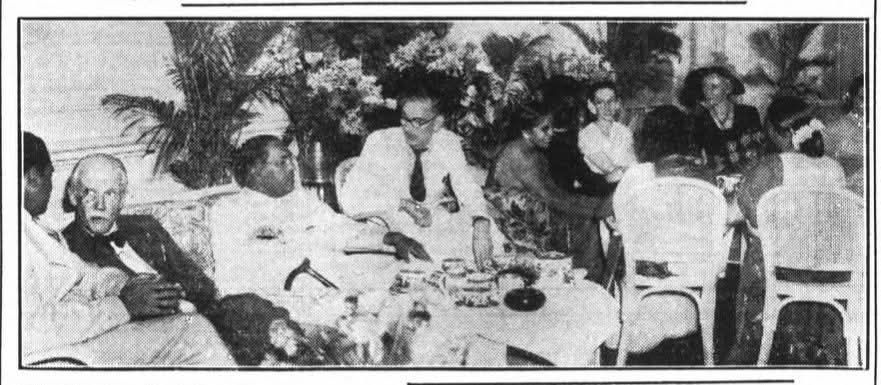
In the year 1950, Dr. Babasaheb Ambedkar, the chief architect of the Indian Constitution and a global scholar, visited Sri Lanka to participate in the World Buddhist Conference. This visit holds immense historical and spiritual significance, as it reflected Babasaheb’s deep engagement with Buddhism and his vision of social equality rooted in Dhamma.
World Buddhist Conference, 1950
Babasaheb’s presence at the World Buddhist Conference marked an important moment in the global Buddhist movement. At a time when Buddhism was gaining renewed attention as a path of peace, compassion, and rational thought, Babasaheb emerged as a powerful intellectual voice representing India and the oppressed masses.
Scholars, diplomats, and prominent Buddhist leaders from Sri Lanka and other countries attended the conference. Babasaheb’s ideas on Buddhism as a social and moral philosophy attracted great respect from the international community.
Tea Party at Face Hotel, Colombo
In honor of Dr. Babasaheb Ambedkar, the Indian Mercantile Association organized a Tea Party at the famous Face Hotel (Galle Face Hotel), Colombo. This prestigious event was attended by:
-
Renowned intellectuals and scholars
-
Diplomats and dignitaries
-
Influential Sri Lankan leaders
-
Members of the Indian community in Sri Lanka
The gathering symbolized the high regard Sri Lanka held for Babasaheb—not only as an Indian leader but as a global thinker and champion of human dignity.
A Historic Photograph – 5 June 1950
One of the most cherished memories of this visit is a photograph dated 5 June 1950, showing Babasaheb with Maisaheb (Ramabai Ambedkar) during their time in Sri Lanka. The photograph captures a rare and intimate moment from this historic journey, reflecting both the personal and public dimensions of Babasaheb’s life.
Significance of the Sri Lanka Visit
Babasaheb’s visit to Sri Lanka further strengthened India–Sri Lanka Buddhist ties. It also influenced his continued study and propagation of Buddhism, which later culminated in his historic Dhamma Deeksha in 1956.
This journey stands as a reminder that Babasaheb Ambedkar was not confined by national boundaries. His thoughts, struggles, and vision for a just society resonated across the world—especially in Buddhist nations like Sri Lanka.
Conclusion
The 1950 Sri Lanka visit of Dr. Babasaheb Ambedkar remains a proud chapter in Ambedkarite and Buddhist history. It highlights his global stature, intellectual brilliance, and unwavering commitment to Buddhism as a path for social transformation.