
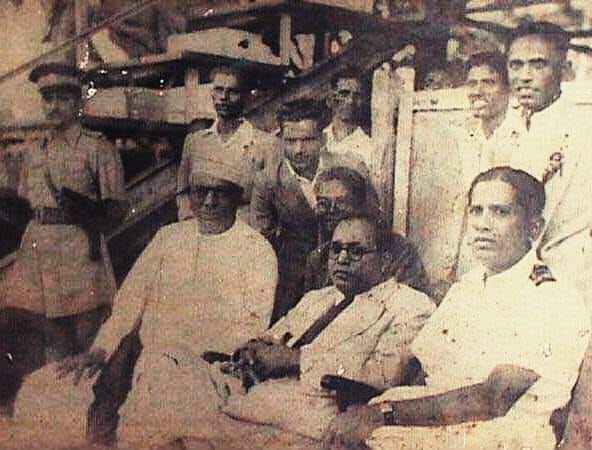
We often remember B. R. Ambedkar as the architect of the Indian Constitution, a legal genius, and a relentless fighter for social justice. However, rare photographs sometimes reveal a different, more personal side of his life.
One such fascinating historical moment captures Dr. Babasaheb Ambedkar watching a football match at Cooperage, Bombay, organized by the Dr. Ambedkar Sporting Club.
⚽ The Event at Cooperage, Bombay
The match took place at the iconic Cooperage Ground, one of Mumbai’s oldest and most well-known football venues.
This was not just a sporting event—it was a community gathering, organized to:
-
Encourage youth participation in sports
-
Promote unity and discipline
-
Build confidence among marginalized communities
The presence of Babasaheb made the occasion truly historic.
🧑🤝🧑 Dr. Ambedkar and Youth Empowerment
Babasaheb strongly believed that education alone was not enough—physical strength, discipline, and organization were equally important.
By attending such events, he:
-
Inspired young people to engage in sports and teamwork
-
Encouraged self-confidence and leadership
-
Strengthened community bonds
The Dr. Ambedkar Sporting Club symbolized this broader vision of holistic development.
This rare photograph is important because it shows:
-
📌 A human and relatable side of Babasaheb
-
📌 His interest in community activities beyond politics and law
-
📌 His connection with youth and grassroots movements
It reminds us that Babasaheb was not confined to books and courts—he was deeply involved in every aspect of social upliftment.
🌟 A Broader Message
Babasaheb’s presence at a football match sends a powerful message:
-
Empowerment includes physical and mental strength
-
Community building happens through shared activities
-
Leadership means being present among the people
🪷 Conclusion
The image of B. R. Ambedkar at a football match in Bombay is more than just a photograph—it is a symbol of his connection with the masses and his vision for an empowered society.
👉 It reminds us that true leaders inspire not only through speeches and policies but also through their presence in everyday life.