
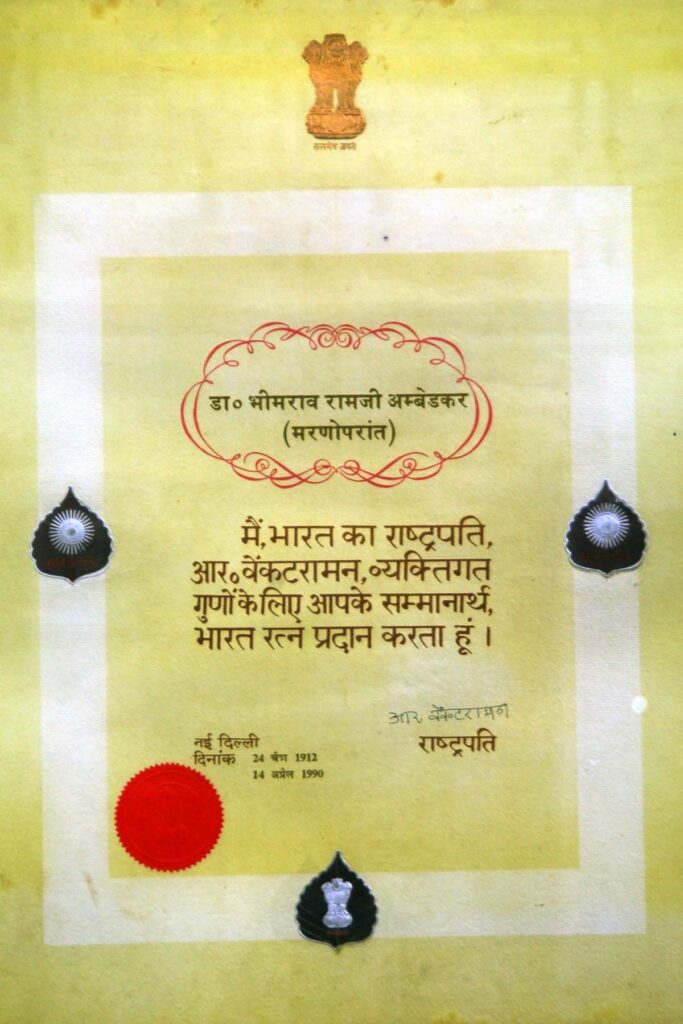
B. R. Ambedkar holds a unique and historic place in India’s journey toward equality and justice. Among his many achievements, one of the most significant recognitions came when he was posthumously awarded the Bharat Ratna in 1990.
A Historic Milestone
Dr. Babasaheb Ambedkar became the first person from the Dalit community to receive the Bharat Ratna. This moment was not just an individual honor, but a powerful symbol of recognition for the struggles, contributions, and aspirations of millions of marginalized people in India.
The award acknowledged his extraordinary role as:
- The chief architect of the Indian Constitution
- A champion of social justice and equality
- A visionary leader who fought against caste discrimination
Recognition After Years
Although Dr. Ambedkar’s contributions were immense, this highest civilian honor came decades after his passing in 1956. The conferment of the Bharat Ratna in 1990 marked a long-overdue acknowledgment of his impact on shaping modern India.
A Symbol of Empowerment
For the Dalit community, Babasaheb receiving the Bharat Ratna was more than recognition—it was a moment of pride and empowerment. It reinforced the idea that dedication, knowledge, and struggle for justice can lead to the highest सम्मान (honor), regardless of social background.
Current Perspective
Even today, very few individuals from Scheduled Caste communities have received the Bharat Ratna. This highlights the need for continued efforts toward equality and representation at the highest levels of recognition.
A Legacy That Inspires
Dr. Ambedkar’s life continues to inspire generations to fight for dignity, education, and equal rights. His Bharat Ratna stands as a reminder of his unmatched contribution to the nation and his relentless pursuit of justice.
Conclusion
The Bharat Ratna awarded to Dr. Babasaheb Ambedkar is not just a medal—it is a symbol of social transformation. It represents the victory of ideas over discrimination and the power of perseverance in building a just society.