
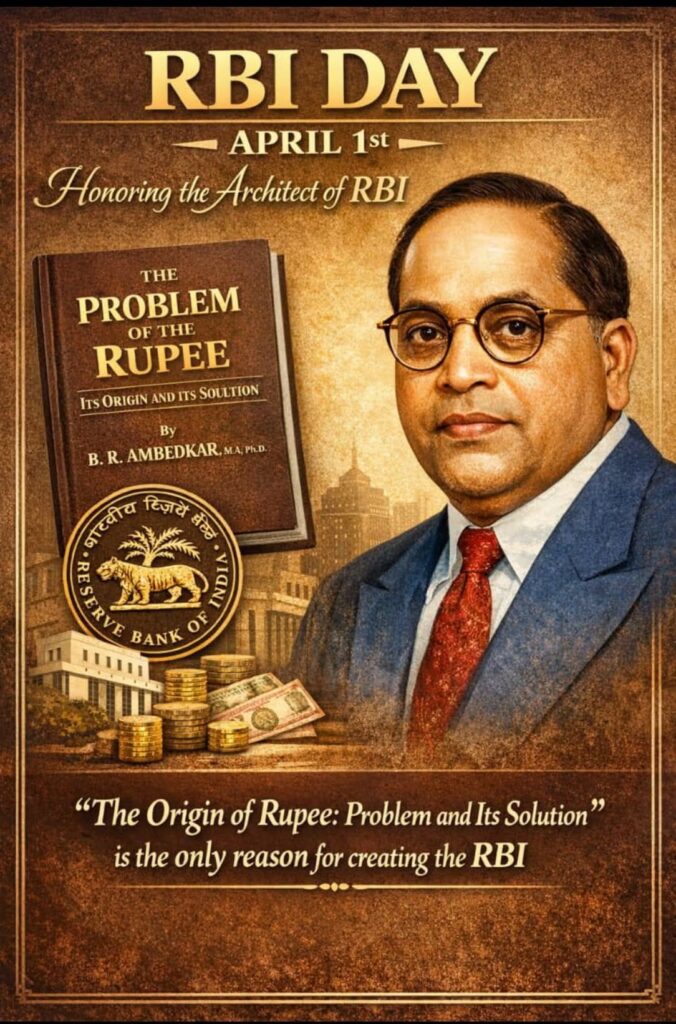
B. R. Ambedkar is widely known as the chief architect of the Indian Constitution, but his contributions to India’s financial and economic framework are equally profound—yet often overlooked. His academic brilliance and policy insights laid the foundation for some of India’s most critical financial institutions.
Academic Vision: A Foundation for Financial Federalism
In 1923, Dr. Ambedkar completed his PhD thesis titled The Evolution of Provincial Finance in British India. This groundbreaking work analyzed the financial relationship between central and provincial governments under British rule.
His research provided a strong academic basis for the creation of the Finance Commission of India, which was later established under Article 280 of the Constitution of India.
The Finance Commission plays a crucial role in addressing:
- Vertical imbalances (distribution of revenue between the Centre and States)
- Horizontal imbalances (equitable distribution among States)
Dr. Ambedkar’s early insights into fiscal decentralization continue to guide India’s financial governance even today.
Shaping India’s Central Banking System
Dr. Ambedkar’s influence extended beyond fiscal policy into the realm of monetary stability. In 1925, he presented his views to the Royal Commission on Indian Currency and Finance.
His seminal work, The Problem of the Rupee Its Origin and Its Solution, was regarded as an invaluable reference by the commission members. In this book, he offered detailed solutions to stabilize India’s currency and financial system.
These recommendations eventually led to the establishment of the Reserve Bank of India under the Reserve Bank of India Act 1934. The RBI became the cornerstone of India’s monetary policy, currency regulation, and financial stability.
A Visionary Economist Ahead of His Time
Long before India gained independence, Dr. Ambedkar had already envisioned a structured, balanced, and fair financial system. His work addressed complex economic challenges such as:
- Fiscal federalism
- Currency stability
- Institutional financial governance
His ideas were not just theoretical—they were practical frameworks that were later implemented into the core of India’s economic system.
Legacy That Shapes Modern India
Today, institutions like the Finance Commission and the Reserve Bank of India continue to function as pillars of India’s economy. Their origins trace back to the intellectual depth and foresight of Dr. Ambedkar.
His contributions remind us that nation-building is not only about political freedom, but also about creating strong economic institutions that ensure stability, equality, and growth.
Conclusion
Dr. Babasaheb Ambedkar was not just a social reformer or constitutional expert—he was a visionary economist whose ideas shaped the financial backbone of modern India. His legacy continues to influence policies that govern the nation’s economy even today.